THE LAW
No yearly PAT rule
HSE says the Electricity at Work Regulations 1989 require equipment to be kept safe, but don't make testing a legal requirement, or say how often.
How often to check calvarytechclubs
SAFE KIT FOR VOLUNTEER SESSIONS
Tech clubs run on laptops, chargers and extension leads, often borrowed or donated.

MYTH a PAT test every year
13A Usual extension lead rating
Keeping that kit safe is mostly about looking carefully, not stickers or yearly tests. This independent guide sums up what the Health and Safety Executive and Electrical Safety First say. It is not a club or church, and it is general information, not legal advice.
THE SHORT ANSWER
The law asks for safe kit, not a fixed routine.
Three things worth knowing.
THE LAW
HSE says the Electricity at Work Regulations 1989 require equipment to be kept safe, but don't make testing a legal requirement, or say how often.
How often to checkUSER CHECKS
HSE says most electrical safety defects can be found by looking, and a brief user check is a very useful part of keeping equipment safe.
What to look forEXTENSION LEADS
Electrical Safety First says most extension leads are rated at 13A, but some older ones and many cable reels are 10A or less.
Leads and reelsHOW OFTEN TO CHECK?
Choose an item to see HSE's suggested starting intervals for low-risk places such as offices. The bar shows how often checks are suggested.
From Table 1 of HSE leaflet INDG236 (rev 3). These are suggested initial intervals to adjust in the light of what checks find.
THE QUICK USER CHECK
HSE's leaflet lists what to look for, with the equipment disconnected. You do not need to be an electrician to do these visual checks.
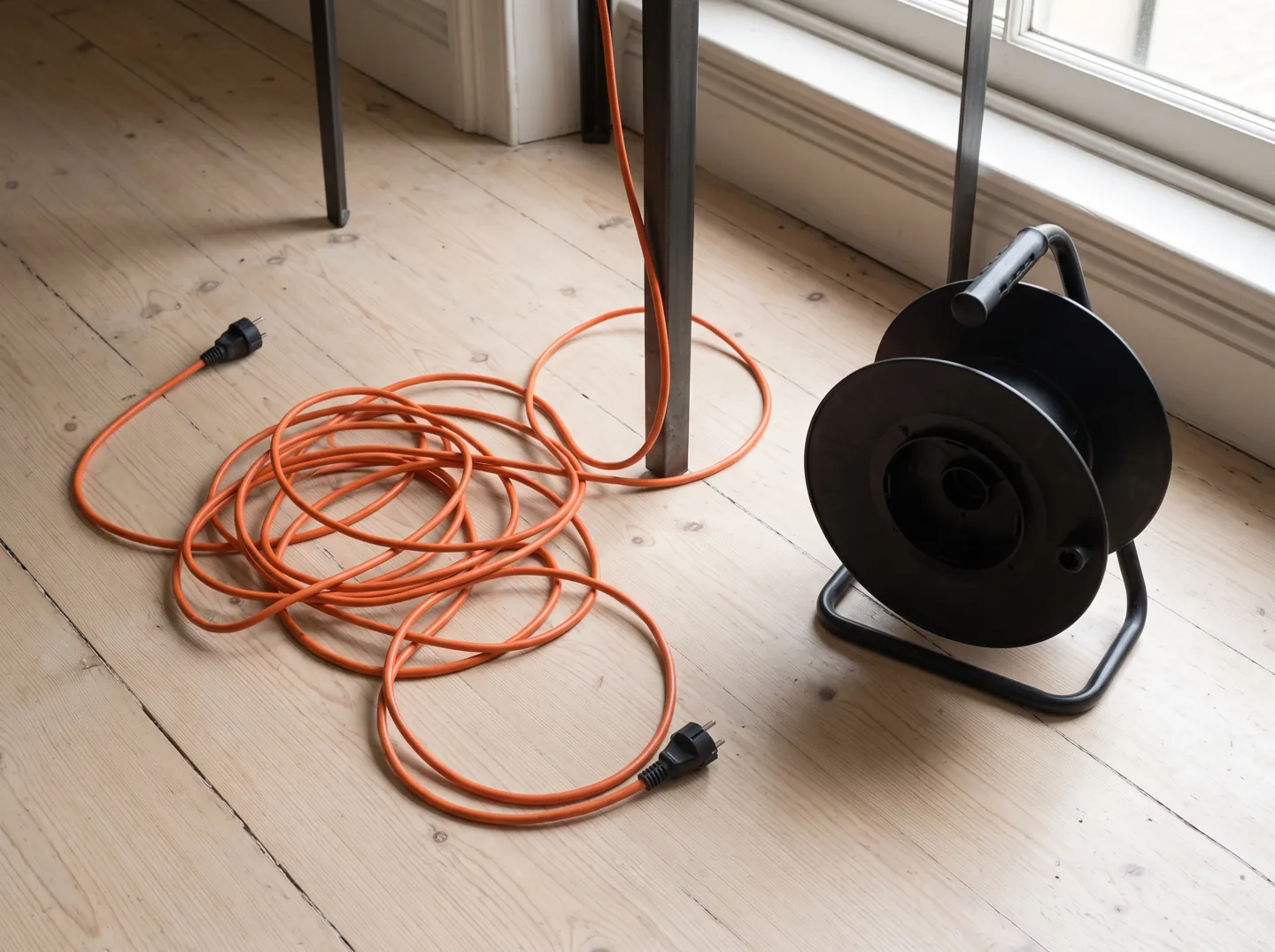
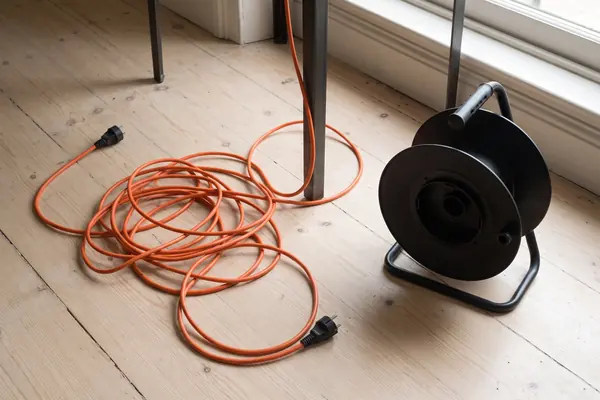
Look for fraying, cuts or heavy scuffing, and for tape used to join leads together.
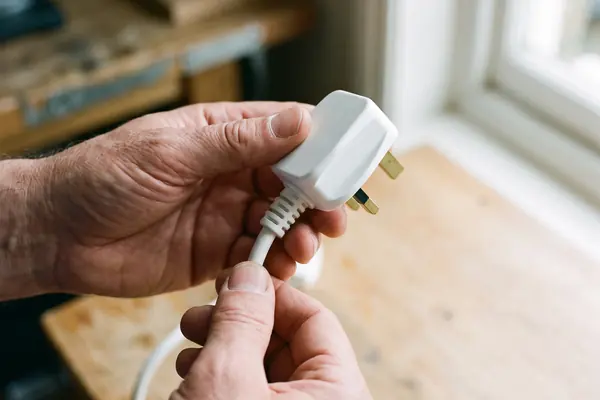
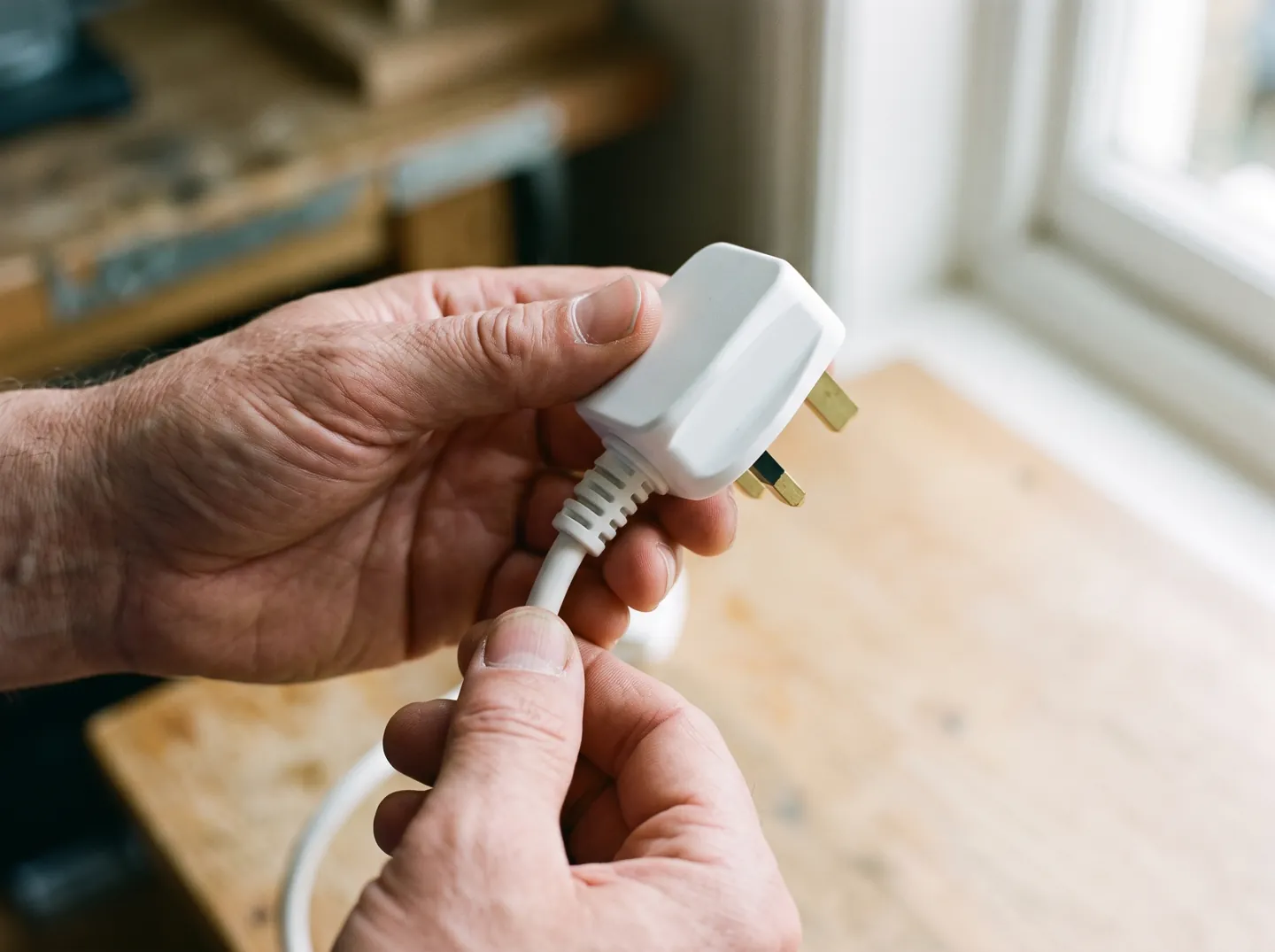
Look for a damaged cover or bent pins, and for coloured wires showing where the lead enters the plug.
Look for damage to the outer cover, loose parts or screws, and burn marks or staining that suggest overheating.
Make sure cables are not trapped under furniture. Take damaged or faulty kit out of use straight away until someone competent repairs it.
TWO NUMBERS WORTH KNOWING
One figure for what a lead can carry,
one for what a wound-up reel can.
13A
Usual extension lead rating
Most extension leads are rated at 13A. Plugging in appliances that together exceed the rating risks overheating and fire.
EXTENSION LEADS · ESF
3–4A
Typical rating of a reel left wound up
Electrical Safety First says a cable reel's rating can be as low as 3 or 4A when wound, so unwind it fully if you need the full rating.
CABLE REELS · ESF
HSE also says there is no legal requirement to label tested equipment or keep records, though both can be useful to show a maintenance scheme exists.
LEADS AND REELS
Electrical Safety First says to check an extension lead's current rating before plugging things into it, and never plug one extension lead into another, as the plug in the wall socket could overheat.
Cable reels should have a thermal cut-out and be fully unwound for full rating. Don't ignore burn marks, buzzing or crackling, blowing fuses or tripping circuit-breakers: unplug and get the item checked.
Questions
No. HSE says the Electricity at Work Regulations 1989 require electrical equipment that could cause injury to be maintained in a safe condition, but do not make inspection or testing, or annual testing, a legal requirement.
HSE says new equipment should be supplied safe and not need a formal test, though a simple visual check is recommended. For desktop computers and screens its table suggests visual inspection every 2 to 4 years.
In many low-risk places, a sensible person with enough knowledge and training can do visual inspections, HSE says. Combined inspection and testing needs more knowledge, the right equipment and the ability to read the results.
Class II equipment has extra insulation so live parts can't be touched even if there is a fault, and does not need an earth. HSE says it does not need a PAT test, but user checks and visual inspections still matter.
No. Electrical Safety First warns that this could cause the plug in the wall socket to overheat.
Updated
ABOUT THIS NAME
calvarytechclubs.com is part of the DoodleSale portfolio. It isn't in an auction right now, but you can ask about leasing it.